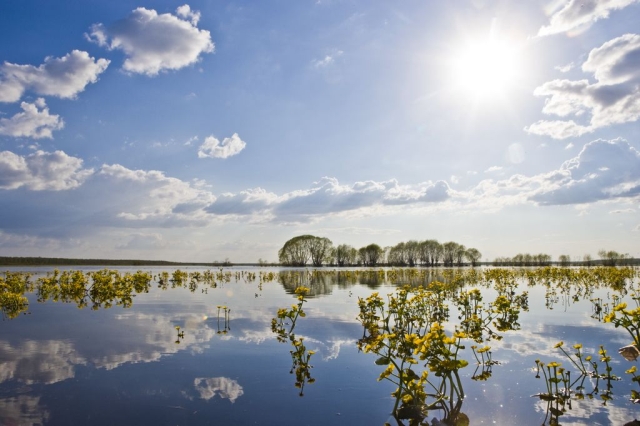
Tartu by You

This is a collection of interesting content recently created either about or in Tartu by nice people amongst and around us.

Continue reading

Posted in Tartu | Tagged , , , , | Comments Off on Tartu by You

How Natural Bar Codes Contribute to Art History

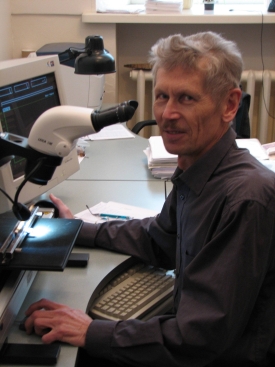
Alar Läänelaid at work

The author at work.

Alar Läänelaid is a docent of landscape ecology at the Institute of Ecology and Earth Sciences of the University of Tartu.

We’re all used to bar codes in supermarkets. In a way, the patterns of annual rings of trees turn out to be bar codes too, as they contain information about the condition the trees have grown in.

The only difference is that the bar codes of trees have a healthy portion of individuality, so distilling data from them is a bit harder than creating beeps with a bar code reader at a supermarket checkout. It’s amazing that the patterns of annual rings also contribute to art history.

What can the bar codes of trees show us? The width of an annual ring is influenced by climate. That is the key scientists have learned to utilize. As the saying goes, years are no brothers, and that’s why a unique pattern of wider and narrower annual rings forms in the trunk of a tree. When we have a long enough succession of annual ring widths, composed by the patterns of many trees, we can use it as a blueprint to detect an unknown individual succession.

Original work or a copy?

Now it’s time to link the biological part to the art. In past centuries, wooden panels were used for painting. Thin planks of oak were glued together edgewise. One can find many paintings without signatures in art galleries, with their closer origin shrouded in mystery. Paintings by famous artists were often imitated to multiply a piece of work. Continue reading

Posted in Natural and exact sciences, Research | Tagged , , , , , , , , , | Comments Off on How Natural Bar Codes Contribute to Art History

7 Great Resources on Estonian Nature

This collection of online resources should help you explore this completely flat, possibly too cold, but stunningly beautiful country. Having visited crowded beaches in faraway countries, a growing number of Estonians prefer to spend their summer vacation in their homeland.

South Estonia

Landscape in South Estonia. Photo by Arne Ader.

Continue reading

Posted in Estonia, General, Natural and exact sciences | Tagged , , | Comments Off on 7 Great Resources on Estonian Nature

Tartu Student Fashion Through Time

As soon as Academia Gustaviana, the predecessor of the University of Tartu was founded in 1632, Tartu student fashion started to evolve.

Back then, students were mostly very poor. It wasn’t rare to see their overcoats and trousers were adorned with patches. However, there were some exceptions.

The university’s Pärnu period (1699–1710) knew one lavishly clad student who raised the ire of professors for his imitation of French courtier fashions. This trend-conscious student wore a brocaded jacket, knee-length trousers, silk stockings, a three-cornered hat on a wig of long curls, and sported a rapier.

17th C. student fashion

A trend-conscious student at the end of the 17th C.

Continue reading

Posted in Estonia, Student life, Tartu | Tagged , , , , , | Comments Off on Tartu Student Fashion Through Time

Forest Plants Have Found Shelter in Manor Parks

Many Estonian manor parks are protected by conservation laws. The main reason for this is the variety of different species of trees in the parks.

Manor gardeners disappeared from the parks along with the estate owners a little less than a hundred years ago. After that, maintaining the parks became more random and many have become forest-like as a result.

Continue reading

Posted in Estonia, Natural and exact sciences, Research | Tagged , , , , | Comments Off on Forest Plants Have Found Shelter in Manor Parks

10 Do’s and Don’ts to Solve Your Writing Problems

Do Don’t
1. Be conscious that the writing process consists of different phases: choosing and defining a topic, formulation of the hypothesis, planning, research, writing, rewriting, and finishing up. 1. Sit behind your desk and write without a good plan.
2. Defining your topic is essential: first choose your topic and refine your topic with a clear hypothesis. 2. Attempt to read and include everything. Do not try to research too many questions. This will often lead to writing which is too general and no focus.
3. Collect material about your topic that is relevant for answering the hypothesis and make sure you make clear notations. It will be easy to find and make references. 3. Copying everything without considering the relevance or make loose notes here and there which you will not be able to find later on in the writing process.
4. Write on a regular basis and make a real effort not to postpone the phases of the writing process. 4. Write during those moments when you are ‘in the mood’ or wait till the last moment.
5. Organize your material to form arguments. Explain your arguments in steps and demonstrate reasoning. 5. Do not accumulate facts without much binding.
Continue reading
Posted in General, Studies | Tagged , , , | Comments Off on 10 Do’s and Don’ts to Solve Your Writing Problems

‘New Biology’ Cures Before The Illness Strikes

Hunting single genes does give a complete picture of how the human body works and illnesses develop. Instead, we should look at the networks of genes and proteins, says University of Tartu Professor Johan Björkegren.

Johan Björkegren

Professor Johan Björkegren. Image credit: Camilla Svensk.

You published a review article in Science Translational Medicine where you talk about ‘new biology’. What is wrong with the old one?

We are using ‘new’ in a double sense (also short for ‘network enabled wisdom’ – A.O.). We wanted to refer to the fact that for researchers it was not possible to address other than perhaps a single gene or a single protein and then try to figure out the role of the particular protein in a particular pathway.

We are not saying there was anything wrong with that but there were no tools to do anything else. All over the world most professors in biology and medicine are professors because they are experts on a particular pathway, sometimes even a particular gene. Continue reading

Posted in Medical sciences, Research | Tagged , , , , | Comments Off on ‘New Biology’ Cures Before The Illness Strikes