Does Frequent Lawn Trimming Reduce Species Richness?

Michael mowing

Mowing won’t harm your low-diversity cultivated lawn, but why not plant a small meadow in your garden? Image credit: Stephen Henderson / Flickr Creative Commons

Warm temperatures have finally advanced spring in a remarkable, long-awaited way: trees, bushes, and flowers are blooming; grass is growing. Alas, the annoying noise of lawn trimming has become an indispensable part of Estonian summers.

But does frequent mowing influence the richness of species in one’s garden or yard? What is the most sustainable and nature-friendly approach to lawn trimming?

According to Meelis Pärtel, UT Professor at the Department of Botany, a lawn is a very artificial ecosystem. “Few species are suitable to a cultivated lawn that is frequently trimmed – it is mostly breeded graminaceous plants, and biodiversity is very low there. At the same time, the world records for species richness on a small scale also come from a community that requires trimming – namely, from wooded meadows”, says Pärtel.

The Laelatu wooded meadow in western Estonia, near Virtsu, boasts two world records for diversity. Laelatu was found to contain 25 different plants in an area of 10×10 centimeters and 42 species in an area of 20×20 cm.

Professor Pärtel recommends planting a meadow-like lawn that only needs mowing two or three times per year in the less-trodden garden areas. These should be low-fertile sandy or pebbly areas, as plants also don’t grow very high on such soils naturally, and a low-density lawn allows for various flowering plants to thrive.

“You could plant seeds of natural meadow species: cowslips, bellflowers, buttercups, and others. Blossoms attract plant-pollinating insects, such as butterflies and bumblebees, which also help garden plants fructify. You can mow lower walking trails into your meadow grass”, advises the botany professor.

The Estonian version of this post was first published in ERR Novaator.

Posted in Estonia, Natural and exact sciences, Research | Tagged , , , , , , | 1 Comment

Doing Practical Fieldwork in Conflict Areas: Israel

Sheltering under the Jaffa Gate during a torrential downpour, we glimpsed a snapshot of Jerusalem’s distinctive diversity. The intensity of the rain had forced at least forty or fifty people into the small medieval tower on the edge of the Old City.

A group of Christian clergymen from a range of ethnic and denominational backgrounds were huddled in one corner, several orthodox Jews were close to me on the opposite side, and there were men and women in traditional Islamic garb interspersed throughout.

A young, enterprising teenaged boy walked in and out of the rain, shouting “‘brella! ‘brella!, ‘brella!” slyly shaking excess water from his demo model onto woefully underdressed locals and tourists – myself included – hoping we’d reach the conclusion that an umbrella would be fifty shekels (€12) well spent. Smiles and glances of shared annoyance at both the weather and the intrusive sales technique were exchanged across religious lines, and in that five minutes I felt we could have been in any cosmopolitan and tolerant multicultural city.

The Dome of the Rock and Western Wall, Jerusalem

The Dome of the Rock and Western Wall, Jerusalem

In April 2016 I spent a week in Israel with nine other students and two instructors as part of an MA course at the Johan Skytte Institute for Political Studies entitled Practical Fieldwork in Conflict Areas. In previous years, Professor Eiki Berg has led fieldtrips to (among others) Cyprus, Moldova’s breakaway region of Transnistria, and to Nagorno Karabakh in the south Caucasus – the latter making headlines recently with a flare-up of violence and rhetoric between Armenia and Azerbaijan.

The Israel-Palestine conflict is enduring, highly complex and generates strong and emotional opinions throughout the world. The opportunity to get on the ground and observe the people and places first-hand, rather than through the lenses of media reports and academic writings was very appealing. Our busy and varied itinerary yielded a wealth of experiences that could fill several long blog postings, so this short account is by no means extensive!

We set foot in the Middle East at Tel Aviv’s Ben Gurion Airport in the early hours of Sunday morning. Our highly hospitable hosts, Ben Gurion University of the Negev (BGU), had a minibus waiting to take our travel-weary group the 100km south to the city of Beersheba, and to our accommodation at Ben Gurion Tower, just off Ben Gurion Boulevard. Subsequently, my first sleep-deprived observation was that David Ben-Gurion’s name is everywhere. Israel’s founding father and first prime minister is immortalised in infrastructure up and down the country in streets, schools and parks, his image even offering helpful advice at the airport in the jolly style of a Nintendo Wii avatar. Continue reading

Posted in Events, Studies | Tagged , , , , , , , , | 1 Comment

Looking For an Alarm Clock for Bacteria

Even among bacteria there are those that go by the Estonian proverb “Wake up early, go to bed late”, as scientists at the University of Tartu have managed to show. Now the same scientists are looking for a way to make all bacteria act this way, as it would make treatment of the diseases they cause much easier.

Diverse E. coli

Understanding the behaviour of E. coli (in the picture) and other bacteria can open new ways to beat diseases. Image credit: Mattosaurus / Wikimedia Commons

In an article published at the beginning of April in Scientific Reports, an offshoot journal of the renowned science journal Nature, Arvi Jõers and Tanel Tenson show how bacterial cells awake from dormancy. It turns out that bacteria possess something resembling memory, and those that drop off last will be the first to wake up.

It is quite common for bacteria to enter the state of dormancy, as Jõers, a senior researcher, explains. “There are periods when bacteria have a lot to eat; then they run dry of the food and a famine begins. During evolution, bacteria have acquired a variety of mechanisms to survive such train of events. When the food runs out, bacteria enter into a state of dormancy, comparable to the hibernation of bears”.

When food sources recover, bacteria wake up and start reproducing. Scientists already knew that some bacteria wake up quicker, while others take more time. It happens this way despite the fact that each bacterium in a colony is genetically identical to the others. Continue reading

Posted in Medical sciences, Research | Tagged , , , , | Comments Off on Looking For an Alarm Clock for Bacteria

You Are What You Eat

As the French gastronome Jean Anthelme Brillat-Savarin wrote in his famous book The Physiology of Taste: Or Meditations on Transcendental Gastronomy (1825), “Tell me what you eat, and I will tell you what you are”.

boy eating bread

An Estonian boy eating rye-bread. Image credit: Estonian Agricultural Museum, http://muis.ee/museaalview/1216077

With this maxim, the author did not only reference the physiological aspects of eating, but something broader – he expressed the idea of food and identity being closely linked in culture as well. What is being eaten can reflect the eater’s economical situation and social status, but also his or her religious, ethnic, or national origin.

Food is an important marker of identity. Even more than this, food is a part of identity politics. We feel communion with those who eat meals similar to those we prefer; those eating different foods seem alien. Many researchers of the food culture of immigrants have mentioned that ethnic or national eating traditions remain important to families and communities even when speaking the native tongue fades away.

What is the food or flavour that Estonians living abroad have missed the most? — black rye-bread. A documentary on food businesses of Estonian immigrants in Toronto is a good example:

Continue reading

Posted in Humanities, Research | Tagged , , , , , | Comments Off on You Are What You Eat

Estonian Ecologists Debate in the Pages of Science

Matsimäe bog in Estonia

Matsimäe bog in Estonia. Photo by L. Michelson

The working rooms of Martin Zobel and Lauri Laanisto, both scientists from Tartu, are less than two kilometres apart as the crow flies. One can walk from Tähtvere district to the Botanical Garden in 15 minutes. Discussing scientific matters by phone or having an argument in an office seems like the easiest thing.

Still, so that the views of ecologists all over the world could be influenced, the discussion between the two men developed on the pages of Science — one of the most well-known scientific journals in the world. This marks the first time that two scientific teams from Estonia are having a discussion in a science magazine that belongs to the top worldwide.

If it were still summer of last year, I would’ve written how “the scientists have proven a long-sought-after ecological correlation”, but by now every sane journalist would use the word “dispute” in the headline of the story. However, neither journalistic angle would actually present a true picture. In fact, it is quite a typical tale about discussions playing a central part in science.

Although ecologists study nature, in this field there is still a dearth of so-called natural laws, proven universal linkages that could be used in describing and predicting the properties of the ecosystem. For decades it has been suspected that one of these links would be the correlation between the productivity of an ecosystem and the variety of species in it. Continue reading

Posted in Estonia, Natural and exact sciences, Research | Tagged , , , , | Comments Off on Estonian Ecologists Debate in the Pages of Science

First National Atlas for Estonia’s 100th Anniversary

No national atlas has ever been published in Estonia. The University of Tartu Department of Geography has set out to fill the gap in honour of the 100th anniversary of the Republic of Estonia, UT as the Estonian-language university, and the department itself. The anniversary festivities will be held in 2018–2019.

The atlas is targeted at all who are interested in Estonian culture, history, and nature. Historical maps along with beautifully designed contemporary maps will portray the country’s development throughout the century in a unique visual way.

Get a glimpse of Estonian history and the future national atlas by viewing these five maps below.

Zones of influence in Estonia in the 1930s

Influence zones in Estonia in 1930-iesSimilarly to the current situation, administrative reform was a hot topic in Estonia in 1930s. This map, compiled by geography professor and future University of Tartu Rector Edgar Kant in 1936, shows zones of influence for the two main cities – Tallinn and Tartu – as well as those of smaller towns.

Places of birth for Estonia’s elite

Places of birth for Estonia's elite Continue reading

Posted in Estonia, Events | Tagged , , , , , | Comments Off on First National Atlas for Estonia’s 100th Anniversary

Marina: Why I Chose To Study in English

When I started thinking about MA studies, from the very beginning I wanted them to be in English. Now, after two years have passed since my graduation, I have never regretted choosing EU-Russia Studies in the European College, which is now a part of the Skytte Institute.

It would be a misunderstanding to say that my determination to study in English was driven by the simple wish to study abroad and have some cultural variety, and, oh yes, that an English-language-based programme would be the only opportunity for foreigners. Yes, of course, the possibility to study with people from different backgrounds was and is tempting.

I would never have imagined that my relatively small course would include students from Mexico and Japan who would become my close friends. I was also very lucky to have Estonian classmates. I was not limited to hanging out with foreigners. Thanks to one of my coursemates, who also became my close friend, I got to know some things about Estonia and visit some places in Tallinn that probably gave me more time to figure myself out.

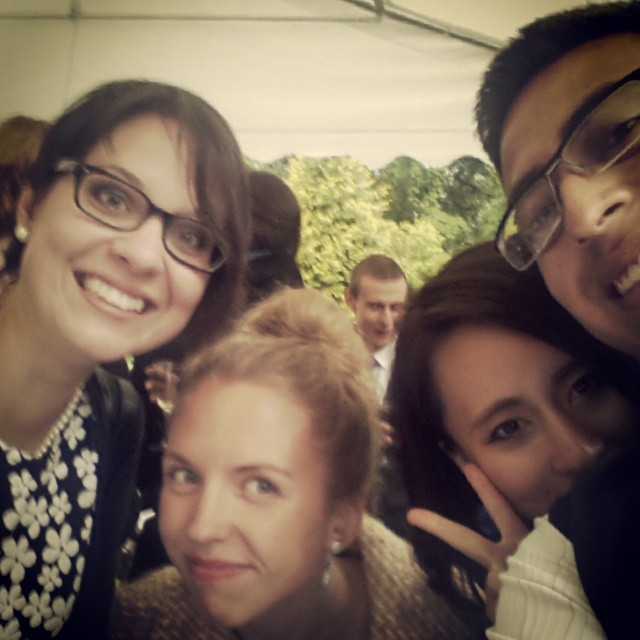
Marina with friends

Me (first from the left) and my classmates. Photo from a personal archive

So yes – studying in an English-language programme broadened my knowledge of various cultures and the way they function. But also during the classes and just informal discussion it was and still is extremely interesting to hear varying opinions about the things you are used to seeing from one particular angle. Continue reading

Posted in Career, Estonia, Studies, Tartu | Tagged , , , , , | Comments Off on Marina: Why I Chose To Study in English