Contest for international students: My Tartu Roots/Routes

UPDATE, 25 February 2020: the contest is over.

The winners of the contest “My Tartu Roots/Routes”

Congratulations to the winners and a big thank you to all the participants! The first prize is a 3-day guided bus excursion to Saint Petersburg. The second, third, and forth prizes are university hoodies. All content participants will receive 10% discount for the Saint Petersburg trip and 5% discount for a 5-day guided excursion to Moscow and Saint Petersburg – just tell your name at the Fromte Travel to get the discount.

* * *

Do you enjoy writing, taking photos, or making videos? Maybe you love all the above? Take part in our contest! Even if your English isn’t perfect – don’t worry. Be creative! Feeling interested? Not yet? We have some cool prizes for you!

  1. Prepare your contest entry on the topic “My Tartu Roots/Routes“. You can do this in writing, series of photos, video, or a mix of them.
  2. Upload your entry to a social media account of your choice as a public post, so we can see it.
  3. Share the link to your post with us here: http://utstudentblog.tumblr.com/submit.

RULES

Can I participate? To participate in the contest, you must be a current international student at the University of Tartu.

Contest period. Contest entries will be accepted until 16 February 23:59 2020. The jury will announce the winners on 25 February 2020.

What should I post? The topic for contest entries is: “My Tartu Roots/Routes”. Multiple entries per person are permitted. Entries will be judged based on their originality and quality of expression. By uploading your entry, you confirm that you own the rights to this work and happily agree that the University of Tartu may use it with proper attribution.

How do I enter? Please fill in your name and email address, and upload the link to your entry: http://utstudentblog.tumblr.com/submit.

No social media account? Upload your work to: http://utstudentblog.tumblr.com/submit.

Prizes. The main prize is a 3-day guided bus excursion to Saint Petersburg on 10–12 April 2020. All participants will receive 10% discount for the Saint Petersburg trip and 5% discount for a 5-day guided excursion to Moscow and Saint Petersburg on 16–20 April 2020. Other prizes include three university hoodies.

Church of the Savior on Blood is one of the main tourist attractions in Saint Petersburg. Image by Georg Adler from Pixabay

We are looking forward to your posts!

Posted in Student life, Tartu | Tagged , , | Comments Off on Contest for international students: My Tartu Roots/Routes

Top 10 Most-Read Stories from 2019

Did you have enough time to read last year? Are you planning to read more this year? In any case, we have compiled our ten most popular stories from 2019 so you can easily find something valuable to explore.

1. 30 Maps of Estonia in 30 Days

In late 2019, Evelyn Uuemaa, a geographer and Senior Researcher in Geoinformatics at the University of Tartu, accepted the challenge to make 30 maps in a row – one each day. She posted the maps on Twitter as a part of the #30DayMapChallenge. Evelyn used open data and open-source software to make the maps. See the story to see them all.

Geographer Evelyn Uuemaa compiled 30 maps of Estonia in 30 days. Image credit: Evelyn Uuemaa

2. An American in Tartu: Subtle differences between living in the US and Estonia

Martin Hayford, a master’s student in the EU—Russia Studies Programme at the Johan Skytte Institute of Political Studies, compares living in the US and Estonia. He looks at transport, the friendliness of people, and shopping opportunities. “Overall, what has surprised me the most about Estonia is how similar it is to the US,” concludes Martin.

3. The Pen

This is a short story that won the fifth place in the international students’ contest. The story happened in Karlova, Tartu:

So, I was sitting in front of this building, smoking, in Karlova, and there was this old guy approaching me, presumably drunk, humming while he walked.

Continue reading
Posted in General | Tagged , , | Comments Off on Top 10 Most-Read Stories from 2019

An American in Tartu: Subtle differences between living in the US and Estonia

Most students in the US don’t travel outside their state when pursuing a master’s degree—much less their country. So, whenever I tell someone what I am doing here in Tartu, I am bombarded with a litany of questions. Being that Estonia is outside the current geopolitical understanding of most Americans (compared to, say, the UK), I must deal with even some very fundamental questions: Where is Estonia? (South of Finland, north of Latvia and Lithuania, west of Russia.) Isn’t that part of Russia? (No.) What language do they speak? (Estonian.)


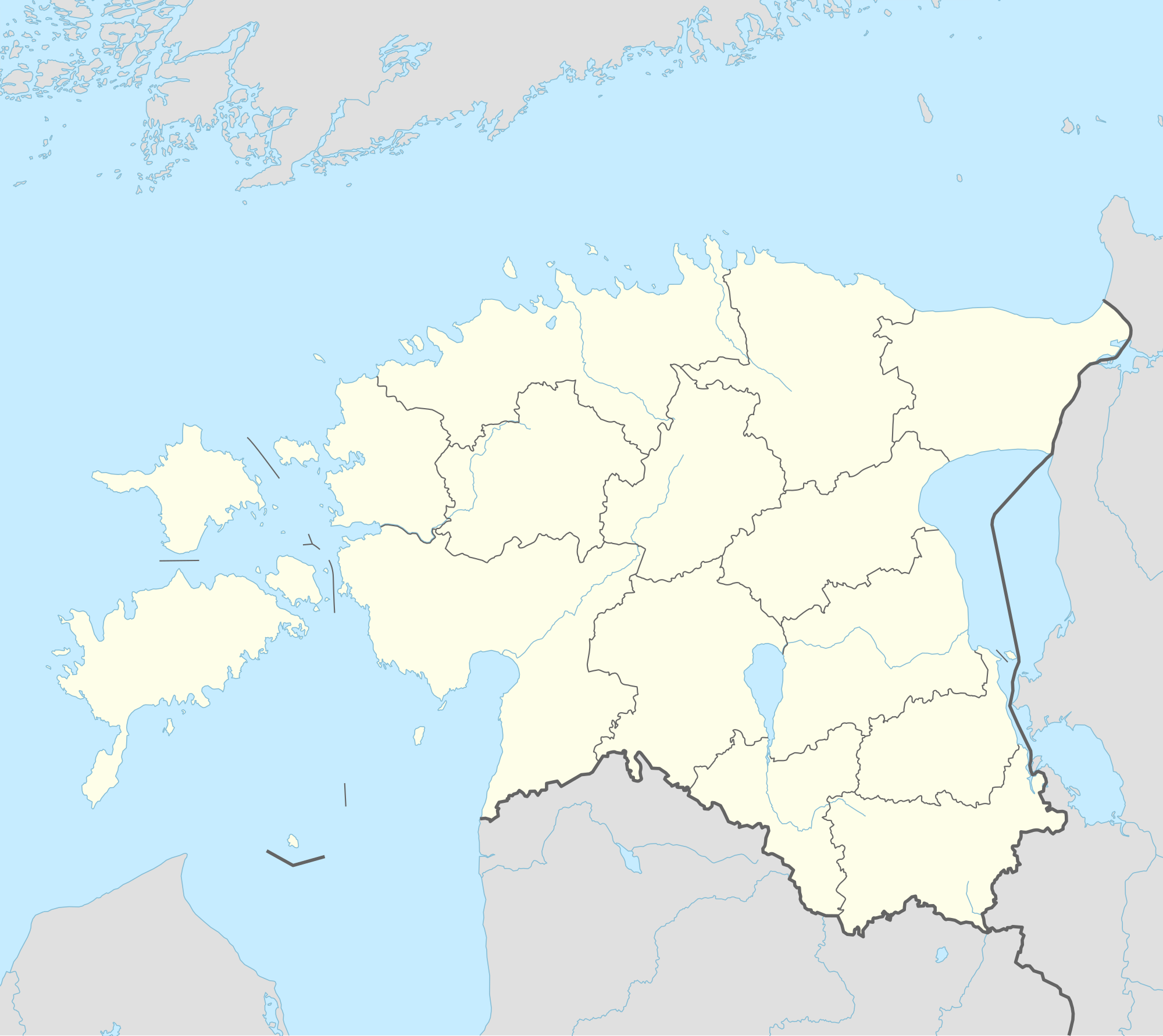
Estonia (Not Russia). Image credit: Wikimedia Commons

But even I—a supposedly informed American—had some questions before I arrived. How do people get around? How do I interact with strangers? Where can I buy [item]? These are more grounded, practical questions, but they are also questions that come up in everyday life. I’ve made a list detailing some of these differences and my thoughts on them.

Transit

Walking is the preferred method of transportation. I know that this could be more specific to Tartu, but even in Tallinn and some other European cities I’ve been to it holds true. Everyone knows that us Americans love our cars. The reality is that it’s not so much of a love affair as it is a hostage situation. Especially in the suburbs, every destination is simply too diffuse to get away with not having a car. Even with the help of a bike, oftentimes the distances remain infeasible (not to mention the lack of any sort of bicycle infrastructure).

But in Tartu, everything is within walking distance. Even places you think are outside of walking distance are within walking distance if you’re determined enough. The Police and Border Guard office down Riia is a common destination for students dealing with immigration documents and is oft cited as “out of walking range.” I’ll admit, I took a bus to get there. But I walked home, and it was lovely.

Continue reading
Posted in Estonia, Student life, Tartu | Tagged , , , , , | Comments Off on An American in Tartu: Subtle differences between living in the US and Estonia

30 Maps of Estonia in 30 Days

About a month ago, Evelyn Uuemaa, a geographer and Senior Researcher in Geoinformatics at the University of Tartu, accepted the challenge to make 30 maps in a row – one each day. She was posting the maps on Twitter as a part of the #30DayMapChallenge. Evelyn used open data and open-source software to make the maps. Please scroll to see them all. Clicking on a map opens a larger view.

So, here come the maps in the order that Evelyn Uuemaa posted them on Twitter.

1. One year of traffic accidents (2016) in Estonia

The map contains approximately 32,000 data points. Map credit: Evelyn Uuemaa
Continue reading
Posted in Estonia, Natural and exact sciences, Research, Tartu | Tagged , , , , , , | Comments Off on 30 Maps of Estonia in 30 Days

The problem with Disney’s live-action remakes: Creating emotion with animation

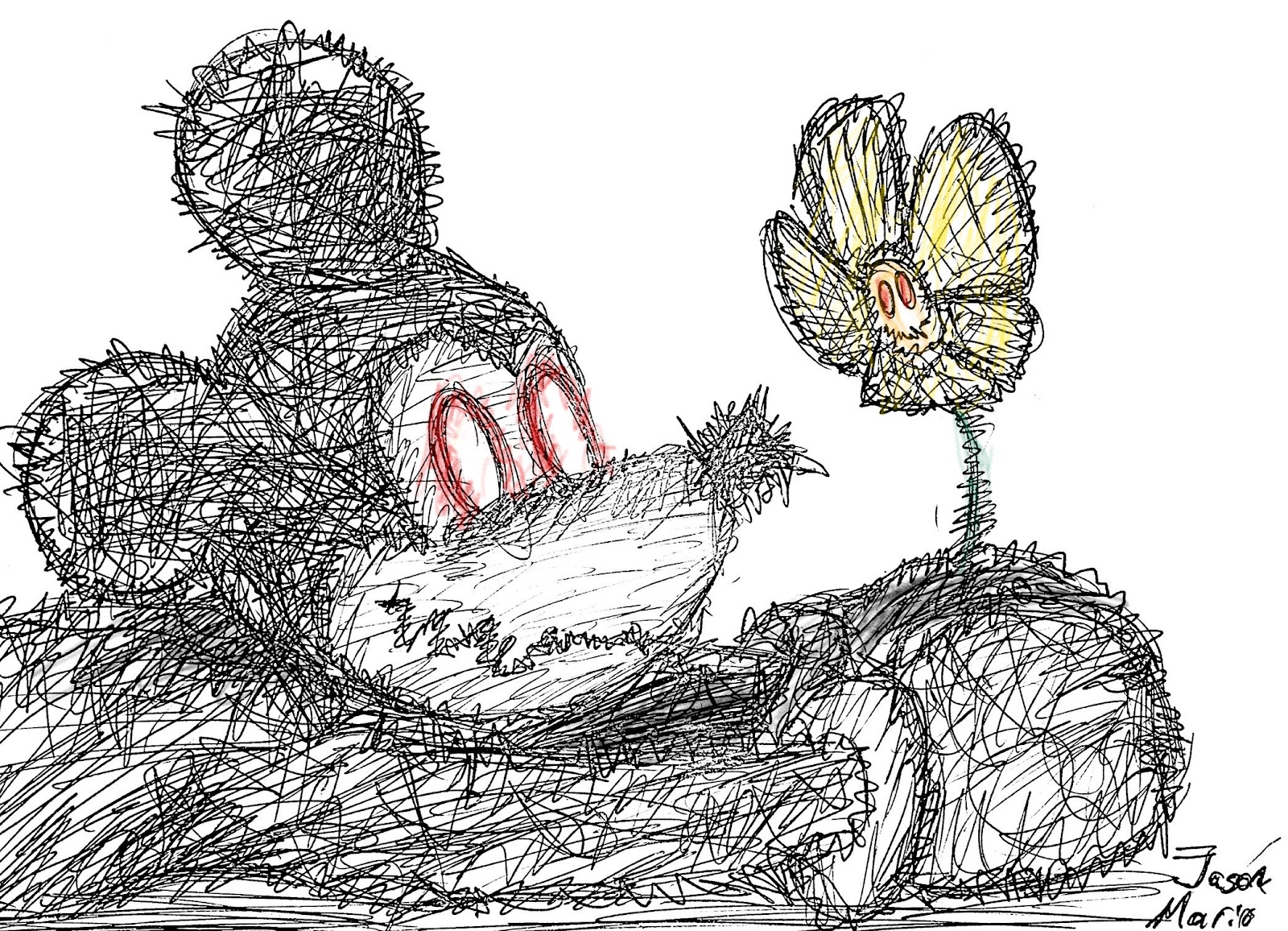
Do Disney’s live-action remakes have the same life and magic as their older animated films? Illustration by Jason Mario Dydynski

Currently, a trip to the movies may make you feel as though you’ve gone back in time to the 1990s. Disney has been on a streak of recreating their classic animated movies into live-action remakes. Disney has been no stranger to live action remakes, including their 1996 adaptation of 101 Dalmatians and their 2010 remake of Alice in Wonderland.

But, since 2014, starting with their remake of Sleeping Beauty: Maleficent, Disney has been churning out remake after remake. Their list of live-action remakes now includes titles such as Aladdin (2019), The Lion King (2019), and Dumbo (2019), with many more remakes in production including Mulan (2020) and The Little Mermaid (TBD).

Many of these live-action remakes have been incredibly successful, and have brought in billions of dollars for Disney. The Lion King (2019) has been projected to have already earned over $1.6 billion worldwide, surpassing its 1994 animated counterpart by $968.5 million. Capitalizing on this success, Disney has no signs of stopping and already has plans for at least ten known remakes for future release.

But these remakes have not been without their controversy. Many have considered these to be a cash grab banking on nostalgia, and  the reception of these films has been rather mixed as a whole. While many moviegoers have enjoyed these films, many of these films have received lower ratings from both the public and critics.

For example, the IMDB rating for The Lion King (1994) is highly proclaimed at a 8.5, while the 2019 counterpart is rated lower at a 7.1. Many are finding the live-action versions to lack a certain heart and energy, making for the movies to be less emotionally impactful. But what exactly makes these original versions have so much emotion, and what is the problem with Disney’s live-action remakes? Well, looking into a bit of animation theory and semiotic research can provide some answers to that.

Continue reading
Posted in Humanities, Research | Tagged , , , , , | Comments Off on The problem with Disney’s live-action remakes: Creating emotion with animation

How do embryos talk?

We start speaking with our mother in uterus.

When did you start speaking? Conventional wisdom would suggest that it would be around the one-year old mark. The conventional wisdom could be off by quite a bit in this case. I believe that the first word of our lives was uttered even before we opened our eyes.

We have been talking since we were embryos. Yes, embryos do talk. The language is not well understood, and it is inaudible, but embryos do speak to their mothers even before implanting in the uterus. In fact, one big reason we are here is probably because we were such big talkers in utero.

Since the inception of in vitro fertilization in 1977, the rate of successful pregnancies has not increased beyond 50%. One of the biggest causes for the low success rate is the failure of the embryo to implant in the endometrium, the innermost lining layer of the uterus.

Scientists have been busy trying to come up with reasons for the low amount of implantation. One of the hypotheses trying to describe the phenomenon, posits that embryos and the endometrium communicate with each other and this communication, if successful, causes the endometrium to change chemically, physiologically and morphologically bringing about the “window of implantation” which leads to a successful implantation.

In the Transgeno research group led by the University of Tartu professor Alireza Fazeli, we are very much interested in baby talk, that is embryo-maternal communication.

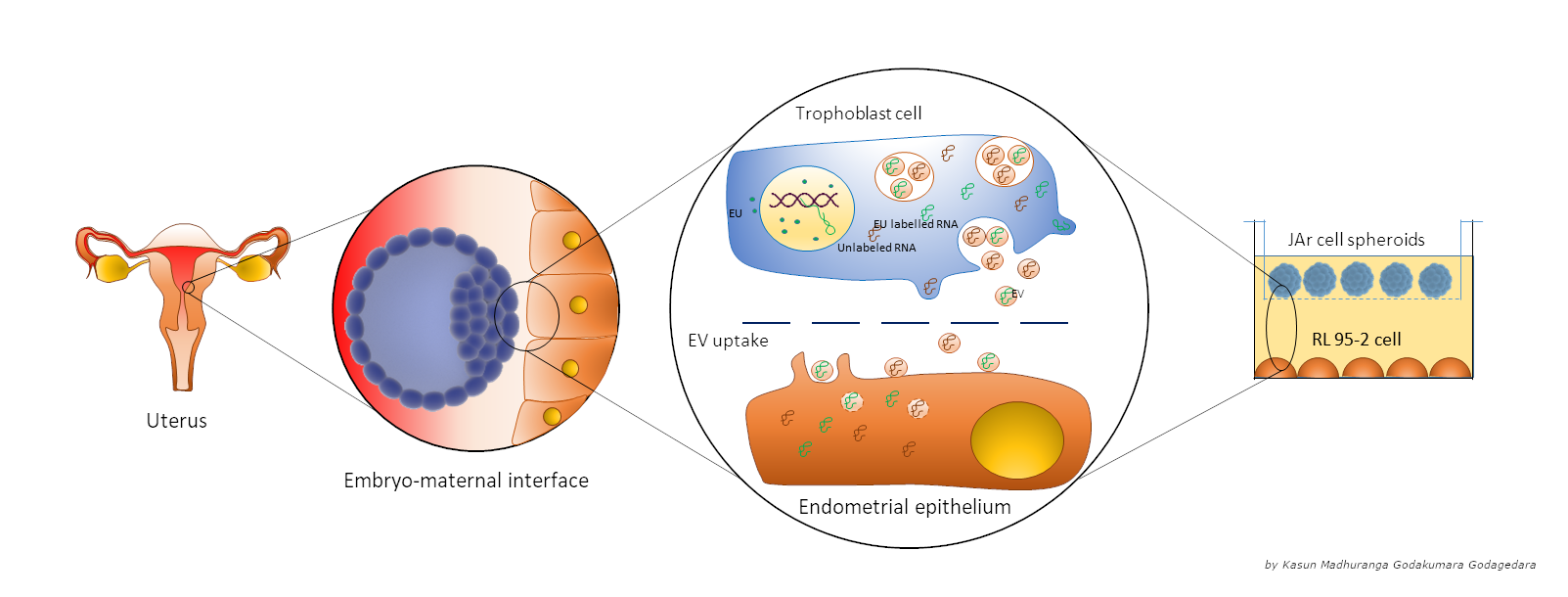
Since it would be highly unethical to test any actual human embryos for embryo-maternal communication, we have used a malignant cell-line based system to replicate the microenvironment immediately prior to embryo implantation.

A scheme of embryo-maternal communication
This is an enlarged view of an embryo in the mother’s uterus. JAR cells were used to mimic the outermost cell layer of the embryo, while RL 95-2 cells were used to mimic the innermost lining layer of the uterus.
Image credit: Kasun Madhuranga Godakumara Godagedara
Continue reading
Posted in Medical sciences, Research | Tagged , , , , | Comments Off on How do embryos talk?

The Pen

The story happened near to Kuu Street in Karlova, Tartu. Image credit: Inga Külmoja

So, I was sitting in front of this building, smoking, in Karlova, and there was this old guy approaching me, presumably drunk, humming while he walked.

As he reached me, he stopped in front of me and started saying a few things in Estonian. I let him know that I did not speak any Estonian, to which he changed to English immediately. He said that he had tobacco, papers and everything, but he needed a lighter.

Of course, mate, I told him. And as he started looking for some tobacco in his bag, he dropped his pen. I told him, mate, you dropped your pen.

– It’s my weapon, he said to my surprise. I’m a poet.

I had to say something. Really? I told him, that’s really cool.

– Everybody is a poet, he claimed this time.

Then he lit his cigarette, we exchanged good wishes, and he left.

Boy, Tartu is beautiful.

Murat Can Yüksel is a master’s student of semiotics at the University of Tartu. This story won fifth place in the international students’ contest.

Posted in Student life, Tartu | Tagged , , , | Comments Off on The Pen