Student diary: About self-care in quarantine

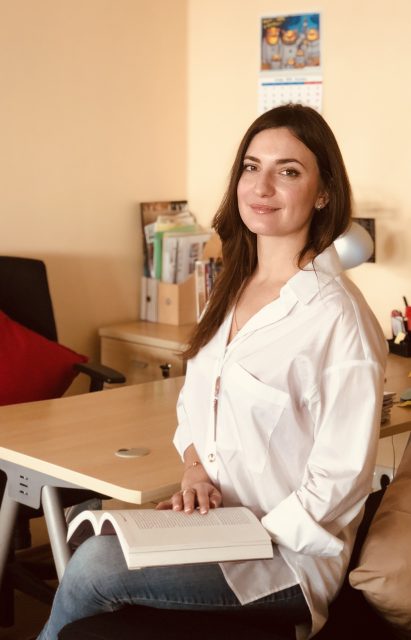
Me at the window of our Tartu apartment, looking for the signs of spring. Photo from a private collection

COVID-19 is omnipresent at the moment. Coronavirus has reached Tartu and we are all affected. To prevent the spread of the virus and due to the state of emergency declared by the Estonian government, not only the university, but most of our personal social life now takes place at home.

I know this situation of social isolation is new, challenging, and also a bit scary for all of us — take it from me, an international exchange student who has not even lived in Tartu for two months and was looking forward to an exciting semester abroad. Still, we have to keep in mind that this is a communal problem, not just a personal one. When experts tell us students to stay at home, we stay at home – it’s that simple. We are in this together now; responsibility and solidarity have rarely been more important than they are now. 

But instead of preaching morality here, I would rather like to give you a little personal insight into how I deal with this situation. I decided to stay in Tartu because I simply feel safer here than I would back home in Germany, where the crisis is currently more severe. I have my own room in an apartment that I share with my two absolutely amiable flatmates. I thought I’d rather sit this one out here in Tartu. However, I would also be lying if I did not admit to myself that I am hoping for this situation to improve soon.

Since the university canceled face-to-face classes I am continuing my studies online. Instead of lectures, we switched to e-learning and seminars turned into so-called webinars (online seminars held in conferences over the internet). Of course it takes time to adjust to these new methods of digital studying, but for now it’s going surprisingly well. Our lecturers and the entire teaching staff are doing their best to make this transition as convenient as possible for us students, and I think I can speak for all my classmates when I say that we really appreciate it.

Anyway, as more cases of suspected coronavirus occur, quarantine and self-isolation will become the norm in the near future. So it is up to us how we deal with this situation. Even though we’re all struggling, I believe that in every crisis also lies an opportunity. See the chance in it and embrace it. This forced break may lead to something positive; for example, I think that we will all learn more about self care.

Taking the time to nurture and take care of ourselves is crucial to our well-being, especially now. Let’s take some time to rest and recover. And then do the things we enjoy. I came up with my own little “self-care routine” that helps me to keep calm in these stressful times. For me, it is waking up when the sun tickles my face and I hear birds singing outside of my window. I’m trying to cherish these little things like creating new playlists, reading intriguing books, writing letters, or exercising. For this, I like to come up with a specific plan for each day to keep myself busy but also make sure I do things that I enjoy.

Finding a creative output can be a great way to actually enjoy all this free time. Whether it is painting, learning languages, watching movies, yoga, baking, TED talks, board games, meditation, puzzles, podcasts, online live concerts or whatever – the list is long and everything works; you just need find your own thing. The key to self-care is that it should be something you enjoy and that may look different to each of us.

I truly believe that this crisis will bring out the best in people.

Keep going, be strong, and stay safe.

Anja Tovirac is an exchange student at the University of Tartu from Germany.

Posted in Estonia, Student life, Studies, Tartu | Tagged , , , , , | Comments Off on Student diary: About self-care in quarantine

Student diary: Deciding about “going back” and getting reliable information on COVID-19

Me, Efe, on the left and me, Ege, on the right. The photo was taken at a private event, when these were still widely common. Photo from a private collection

Dear UT Blog readers,

First of all, how are you? Hope you’re all safe and feeling better! 

We’re Efe and Ege, second-year medical students at the University of Tartu. Our names might sound familiar to you – and they would, if you’ve read this post! Anyway, we’re from Turkey and have been living in Tartu for almost 2 years now. 

Now the world surrounding us is literally shaking with the on-going pandemic, COVID-19. So, according to the WHO, pandemy is the worldwide spread of a new disease when most people don’t have immunity to it. We heard many stories from the epicentre of this pandemy, Wuhan, which seemed very far, far away from the portion of world we’re living in.

However, this didn’t take long, and the virus unfortunately spread to every continent. When COVID-19 arrived to Europe, it’s debatable whether countries took adequate measures – but what’s obvious is that it brought fear and anxiety to everyone’s hearts. 

In this hard time, when social life almost stops to prevent the spread of a virus, we need information. We are curious about what’s happening in countries where our families are, or about the place we’re currently residing in. All of us had, have, and will have these questions in our heads.

The first question that usually comes to mind is: why are we here? The key point that made us stay here during the outbreak is definitely the uncertainty that it brought to our lives. Although there are very strong predictions, no one exactly knows how the situation will evolve, and, up until the time when things get clear, the safest option for us was to minimize the risk of acquiring an infection. 

Indeed, this wasn’t the easiest choice that we’ve made, it took days of video-conferencing with our parents and family, evaluating all of the options about the risks and benefits. Also, it’s still an uncertainty whether we would need to travel back due to border closure issues – so now, we’re following the dynamics and let them lead the way, while we’re concentrating on our own well-being. 

On the other hand, we kept reminding ourselves that this break is not given as a holiday, but rather that classroom teaching was moved to an online environment. Thus, we also needed to stay in a place where we can continue concentrating on our studies thoroughly – and in this particular case, Tartu seems and feels like the right place. 

Continue reading
Posted in Estonia, Student life, Studies, Tartu | Tagged , , , , | Comments Off on Student diary: Deciding about “going back” and getting reliable information on COVID-19

Who follows in the steps of Greta Thunberg

School strike for climate on the Town Hall square in Tartu on 15 March 2019. Image credit: Ehitaja / Wikimedia Commons CC 4.0

A year ago today, the global youth strike for climate gathered more than one million participants at 2200 events in 125 countries. It became possible after a 15-year-old Greta Thunberg sat in front of the Swedish parliament every schoolday for three weeks from 20 August 2018 to protest the lack of action on the climate crisis. She posted what she was doing on Instagram and Twitter and it soon went viral.  The movement became known as #FridaysforFuture (FFF).

An international team of researchers has recently concluded a report on the participants of the FFF climate protests. The report analyses survey data about participants in the strikes of September 2019 from 19 cities around the world and compares it to the data from an international survey conducted in 13 European cities in March 2019. Both surveys collected data following the well-established “Caught in the Act of Protest” survey methodology in order to generate representative samples.

What makes FFF new and particularly interesting is the involvement of schoolchildren and students as initiators, organizers, and participants in climate activism on a large scale. The September mobilizations differed from the March events in the explicit call for adults to join the movement. Although older age cohorts were more strongly represented in September, young people continued to make up a substantial portion of the protesters – almost one-third of demonstrators were aged 19 or under.

This, however, varied greatly by cities – while in the Swedish cities very young people formed up to 10% of respondents, in Florence, Bucharest, Copenhagen, Prague, and Warsaw at least half of the participants were under 20. A third of young participants had not taken part in any political actions before – the respective measure for those over 20 is much smaller – 9 per cent.

Age groups of participants by city in September 2019
Continue reading
Posted in Events, Research, Social sciences | Tagged , , , , | Comments Off on Who follows in the steps of Greta Thunberg

How psychology can help shape policies (1/3): Modelling behaviour

A psychologist can work with individuals, but s(he) can also influence the behaviour of larger groups. Image credit: Inga Külmoja

The word ‘psychologist’ tends to be associated with an image of a psychotherapist working with a patient who has turned to them as a last resort, perhaps even with eyes cast down in shame. There are many things wrong with this picture, some of which fall beyond the scope of this story. For instance, we will not explain why visiting a psychologist should be no more shameful than visiting a general practitioner. Or, that in addition to treating mental illness, psychologists are also well-equipped to improve well-being and productivity.

The misconception addressed here is the idea that psychology is relevant only for work carried out with a single individual at a time. We hope to debunk this myth by showing that psychology is useful for those who create various social systems ­– the tax system, health care system, educational system, and others. In short, we will discuss using psychology in policy making.

Policies – from laws to specific regulations – create frameworks for society to operate in. Many policies are, among other aims, designed to shape behaviour. A policy-maker, for example, may wish for drivers to obey a speed limit or for entrepreneurs to honour their tax obligations.

Authors of such behaviour-shaping policies face at least three challenges that relate to psychology. Firstly, they need to understand the mechanisms underlying the behaviour they wish to influence. Secondly, they benefit from knowing how to influence behaviour without force and coercion. And thirdly, when assessing the impacts of policies, they may want to measure changes on the psychological level. For all of these challenges, psychology and other behavioural sciences are an excellent source of practical models, persuasion techniques, and assessment tools.

Continue reading
Posted in Research, Social sciences | Tagged , , , , , , | Comments Off on How psychology can help shape policies (1/3): Modelling behaviour

Laziness and Erasmus go together well. So how to make the most of your study abroad?

Jiří Svoboda

I arrived in Tartu just over two weeks ago as part of my Erasmus, and, after a few days, I was surprised and frankly overwhelmed with one particular aspect of living here.

Personally, I have already experienced going to a new city for studies, so I sorted out most of the basic necessities quite quickly. But there was one thing I was not really prepared for.

So. Much. Time.

See, at my home university, I am usually the kind of guy who combines studies and work in heavy doses, so I wake up, get out of the flat, and do not return till 7 PM at best. But I actually like this lifestyle and having lots of things to do proved both effective and useful to me. In fact, the less I have on my schedule, the bigger the chance I won’t finish it by the end of the day.

There is so much to do; even lectures count on the fact that most people do not read all the literature. It is for this reason that I usually don’t spend much time at parties or similar student events.

But in Tartu (and probably any other city in the case of Erasmus) it is an entirely different story: only one or two classes a day, dorms a 10–15-minute walk from the university, less study work to do, and, most importantly, a bunch of new people that strive precisely for parties and student gatherings of any kind.

This is how may calendar looks like with only classes and gym. There is so much time. Photo from the personal archive

When you think of it, this aspect of Erasmus studies kind of makes sense. The majority of people who come here have no idea what to do in the city, so they are happy to accept a helping hand. And, guess what, one of the first helping hands that foreign students encounter is the Erasmus Student Network (ESN) – an organization whose student events are among other things quite a lot about partying. 

This can work just because of the fact that Erasmus students have way too much time on their hands and, of course, partying is the easiest way to fill it up. Or waste it. As an Erasmus student, just ask yourself if you encountered this many parties at home.

Thus, if you are just a big party person or you want to experience a different and maybe more exotic Erasmus than the one based on partying (like me), you will have to make an extra effort to escape this stereotype. Personally, I believe one should not just try to fill up their time somehow. That will inevitably lead to a waste of time.

So, I would like to present a few methods that proved useful to me in that short time. They are primarily meant for people who already feel they need a change to their lifestyle.

Continue reading
Posted in Estonia, Student life, Studies, Tartu | Tagged , , , | Comments Off on Laziness and Erasmus go together well. So how to make the most of your study abroad?

Snowy days have decreased substantially in Estonia

In the end of December 2019, there was no snow in Tartu. Instead, liverworts (Anemone hepatica) were blooming at the UT Botanical Garden. Image credit: Inga Külmoja

Geographers of the Institute of Ecology and Earth Sciences of the University of Tartu have released a study indicating that the snow situation in Estonia has substantially changed in the last decades. While our grandfathers and grandmothers could often sled in the beginning of April as children, the kids of today can put away their sleds in the middle of March. There’s just no snow.

Air temperature has risen by two degrees

Snow cover depends on the air temperature. It lasts when the temperature is near zero, which is quite characteristic of the climate in Estonia. As the average air temperature has significantly risen in Estonia during the last decades — nearly two degrees, compared to the post-war years — it’s natural that there has also been a noticeable decrease in snow cover. Presuming that the climate keeps getting warmer, analyzing changes that have taken place allows for making trustworthy forecasts about the condition of snow cover in the future.

Snow thickest at the end of winter

Continue reading
Posted in Estonia, Natural and exact sciences | Tagged , , , , , | Comments Off on Snowy days have decreased substantially in Estonia

How Lyudmyla leads semiotic research in a Moscow agency

Semiotics is the study of signs and sign systems (e.g., languages, music, advertising, road signs, etc.). It is an investigation into how meaning is created and how meaning is communicated through signs. You can study semiotics at the University of Tartu.  

In the beginning of 2017, Lyudmyla Zaporozhtseva moved from Kiev to Moscow. After a successful collaboration with the Enjoy Understanding marketing research agency, she accepted their invitation to work as a full-time expert in semiotics. It was a new position, created for Lyudmyla. Three years on, she leads a semiotic team in this agency.

Lyudmyla told UT Blog about how the agency works, what her daily work looks like, and how she feels about her recent PhD defense at the University of Tartu.

Image from a personal archive

The role of semiotics in the agency

Enjoy Understanding uses traditional qualitative methods along with semiotic research. Having semioticians on the team in a marketing agency is rather unique. In Estonia, where the semiotic tradition thrives, few marketing agencies use a semiotic framework. Ordering semiotic research isn’t mainstream in other places either.

Lyudmyla admits that three years ago, when she started work at the Enjoy Understanding agency, it was much more difficult to convince clients to use semiotics. Now the situation is changing. Big clients with head offices in Europe already know about semiotics and want to apply it for building a cultural strategy of a brand. Clients who do it once often want to do it again.

Lyudmyla and her team are involved in the majority of the agency’s projects, even if no extensive semiotic research is needed. It is common to discuss all incoming work together and provide feedback to each other. For instance, when they start working with an insurance company, it is useful to look into the concept of safety – what safety means, how it is expressed, etc.

Lyudmyla’s work implies going through a lot of cultural evidence. Image from a personal archive
Continue reading
Posted in Career, Humanities, Research | Tagged , , , , , , , , | Comments Off on How Lyudmyla leads semiotic research in a Moscow agency