4 New Recipes for Becoming a Top Researcher

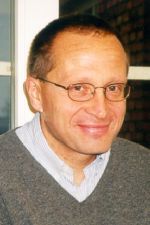
Jüri AllikJüri Allik, Professor of Experimental Psychology at the University of Tartu, belongs to the top one per cent of the world’s most cited scientists in his field. His 7 Recipes for Becoming a Top Researcher, originally published more than two years ago, enjoyed huge popularity and made it to the University World News. Now Professor Allik unveils a few more secrets to a researcher’s success.

One might think there’s no need to write any more cookbooks. There’s a vast amount of these available for all tastes. Still, new cookbooks are written all the time, because the buyers are there. It’s the same with advice about practising science without leaving behind a trail of works no one has ever read. Some time ago I wrote down some simple suggestions about becoming a good researcher. Most of these insights had something to do with time, with understanding that next to intelligence, time is the most limited resource. One has to learn to use it successfully. Surprisingly, the small story, published by University World News, became quite popular. Thus, violating the experimenter’s main mantra  – there’s no need for repeating a successful experiment – I’ll try to share a few more suggestions about what could be of help in accomplishing something in the field of science.

Recipe No. 1: Listen carefully to those smarter than you

We didn’t pay too much attention when mother told us to wear warm socks or to avoid a bad habit such as biting our nails. Unfortunately, once independent, we tend to act in similarly unruly ways, especially when we have taken an academic course. There’s so much great advice that we just systematically ignore. Take, for example, “Avoid Boring People“, a book by James Watson that I’m really fond of.

Regrettably, the book was published around the time when Watson – the discoverer of DNA – made a misunderstood remark about African countries needing more brain and less financial help. As a result, the lessons of the man’s life received less attention than deserved. It is true, however, that many of the lessons in the book might be not so helpful, such as the piece of advice that one should rather buy a tailcoat than borrow it, which is useful strictly if no one in the family has gained a lot of weight over time.

On the other hand, the most useful tidbit – for me, at least – can be found right in the title: Do avoid boring persons. Watson also suggests not giving dull speeches which someone else could deliver just as well. In life, and especially in science, there’s a really simple principle of reciprocity at work: If you don’t want people to bore you (with a story, a job, a meeting, an article or anything else), watch out and don’t be the one getting on others’ nerves. To be precise: You can leave the subpar articles for others to write. Although it might sometimes sound Utopian, it’s always wise to do things you are most interested in. Continue reading

Posted in Career, Humanities, Medical sciences, Natural and exact sciences, Research, Social sciences | Tagged , , , , , , | Comments Off on 4 New Recipes for Becoming a Top Researcher

To Be Estonian – It Sucks! Or not?

Even if you  live in Estonia, follow local news, or know some Estonians personally, it might still come to you as a surprise. The misery of being an Estonian is a well-kept secret, or an insider joke strictly reserved for those affected. Well, no longer, as a parody video featuring Estonian actors Märt Avandi and Ott Sepp, produced by a creative team of four of our graduates in political science – Tõnis Leht, Kaaren Kaer, Andres Korberg and Erik Moora – has been equipped with English subtitles (click on ‘CC’ below the video to enable captions):

This parody of Estonian moaning and self-pity, serving as a handy introduction to Estonian history, was shown on national television on New Year’s Eve as one in a series of  seven sketches. The Estonian daily Postimees evaluated the fun-making highly by giving the creative team of the series, Tujurikkujad (‘Mood Spoilers’), the Cultural Engine of the Year award.

While the actors in the team are mostly in it for fun, the rest of the ‘Mood Spoilers’ see value in tackling social and political problems as an essential part of the endeavour. Vello Pettai, UT Professor of Comparative Politics, spotted this critical spirit of the ‘true student souls’ and their work immediately: “In my view, the novelty of these guys lies in creating a crossfire of our history, politics, and national character”. Continue reading

Posted in Estonia, Events, General | Tagged , , , , , , | Comments Off on To Be Estonian – It Sucks! Or not?

Startup Nation Estonia: An Austrian’s View

Georg Singer

Georg Singer. Photo by Andres Tennus.

Georg Singer is a development manager at the UT Institute of Computer Science. Last autumn he defended his PhD on web search engines and complex information needs at UT and will teach a course on software entrepreneurship during spring semester.

Every now and then I find myself immersed in Tartu’s nightlife. Estonia’s second biggest town still hosts some of those nicely improvised places to hang out. I often wonder if they ever make money, but it is about the fun, isn’t it? This is an attitude that many “older” countries have slowly lost along the capitalistic way.

Tartu also calls itself owner of the world’s first pub started and run by IT geeks  – I am in the country of patch cables, smartphones and programming languages. As a matter of fact, sooner or later, somebody asks me: “So how long have you been living here?”, quickly followed by, as sure as death and taxes: “How about your Estonian?!” This second question almost makes me feel guilty about still not being fluent in this difficult language that is spoken by less than a million people. I convince myself that I do what I can.

Fast rewind to 10 years ago: Estonia? Isn’t that a little country up north in the Baltics? That was pretty much what I knew back then in 2003. A school classmate of mine had been to Lithuania in the 90s. After the horror stories he told us, I had no intention whatsoever to go or even live there. Well, never say never! Life sometimes takes surprising turns. Why did I, born in Austria, having lived in Germany and the UK, come to Estonia in the first place? When people ask me that “why” question, I simply raise my left hand and show them my wedding ring. Yes, I came to Estonia for solely romantic reasons. Continue reading

Posted in Career, Estonia, General | Tagged , , , , , , , , | 6 Comments

7 Recipes for Becoming a Top Researcher

Jüri AllikJüri Allik, Professor of Experimental Psychology at the University of Tartu, belongs to the top one per cent of the world’s most cited scientists in his field. His ‘7 Recipes’ post, originally published more than two years ago, enjoyed huge popularity and made it to the University World News. Now Professor Allik has agreed to unveil a few more secrets to a researcher’s success and, while you are waiting for this treat, we’re republishing his initial words of wisdom.

Young people entertain the illusion that they will live forever, and therefore time has no particular value to them. However, success in scientific research presupposes the ability to travel in time. Unlike a dilettante, the professional scientist needs to think about how his/her ideas will be received in 10 years’ time.

For example, in order to be in the top 1 percent of the most-cited researchers in the field of psychiatry and psychology today (Here and further on the point of reference is June 2010 – Editor’s note), articles that you have published in the last 11 years need to have received at least 533 citations (ISI Essential Science Indicators).

Presently there are only 15 scientists in Estonia who have crossed the 1 percent mark in their respective fields of research, two of whom are psychologists (Risto Näätänen and Jüri Allik). Of course, there is also Endel Tulving (a pioneer in memory research, Estonian-born professor emeritus at the University of Toronto), but credit for his work goes to Canada.

Thus, achieving success is not that difficult. The fundamental rule has been nicely worded by Malcolm Gladwell in his book Outliers (2008). The key to success in any field is a matter of practicing a specific task for a total of around 10,000 hours (The Ten-Thousand-Hours Rule). This rule, as Gladwell convincingly demonstrates, holds true both for Mozart as well as for Bill Gates. Continue reading

Posted in Career, Humanities, Medical sciences, Natural and exact sciences, Research, Social sciences | Tagged , , , , , , | Comments Off on 7 Recipes for Becoming a Top Researcher

Living on the Edge: Landlocked Seals in a Changing Climate

What does a ringed seal need to live? Plenty of fish and some Mollusca to eat, as well as cold winters and lot of hummock ice in which the females can dig their pupping caves.

Even when there’s enough food, continuously warmer winters may make the ringed seal (Pusa hispida botnica) extinct – such is the gloomy conclusion made by Mart Jüssi, a seal biologist, in his freshly defended doctoral thesis where he analysed the impact of changes in climate for three distinct landlocked species of seals: the grey seal (Halichoerus grypus) found in the Baltic Sea, the ringed seal, and the Caspian seal (Pusa caspica). He was interested in how the warming climate influences seals’ reproduction and chances for survival.

seals in the sea

Mart Jüssi: “There is little room for seals to take risks in nature – those that turn up in the right place at the right time will survive”. Photo by Ivar Jüssi.

Continue reading

Posted in Estonia, Natural and exact sciences, Research | Tagged , , , , , , , , , , | Comments Off on Living on the Edge: Landlocked Seals in a Changing Climate

Traffic Culture in Estonia: What Reflex Reflectors and Saint Christopher Have in Common

Natalia Hoffman is an independent researcher into the visual communication of Estonia with the Estophilus Programme, an exchange student in Tartu from Aarhus University, Denmark, where she’s finishing her MA in Cognitive Semiotics, and a beetroot juice drinker big on detective stories who dresses in secondhand shops and watches TV for the sake of advertising. This is her second instalment in the series:

Case Studies on the Estonian Universe of Visual Meaning 

I remember a few years back I was on a bike mission in London, trying to cover some 15 kilometres during a rush hour in the afternoon. It was summertime. The roads were busy and an accident ready to happen seemed to lurk at every crossroad, so an anxious companion of mine decided to cycle on the pavement for the safety of it. Five minutes later and the polite policemen, whom without fail one encounters in London, stop her and write her down for posing a threat to pedestrians. They write me down along with her (I cycled on the road, but the two of us were sisters in handlebars and so on). A warning was issued and the intricate mechanisms of road safety laid bare to us. Ever since that moment I have become slightly disturbed by the sight of people cycling on the pavements. You know, it’s one of those primed responses – just like alcoholics in treatment who are subjected to a minor electric shock when drinking, so that they associate drinking with pain, I too get a twitch every time I see someone cycling on the pavement.

A few weeks into my stay in Estonia and I almost had a head-on collision with a cyclist, I witnessed two cyclist-pedestrian knockdowns and thus inferred that bicycle users generally prefer pavements over streets. I started wondering what and why. I snooped around and found out that according to Estonian law: Continue reading

Posted in Estonia, Humanities, Research | Tagged , , , , , , , , , , | 2 Comments

What Do Women Appreciate in Men?

For a long time evolution scientists thought manly physiognomy to be the main attraction. But a slender body is even more enticing than an alpha-male face, according to a study co-authored by Indrikis Krams, a visiting professor at the University of Tartu.

Belt Corset from 1893

Men of the late 19th century appear to have known that a slender body is an indicator of a man’s strong health and attractiveness. As the ad goes: “Besides showing off the figure and enabling the tailor to ensure an effective fit and distinguished appearance, this combined Belt Corset is a necessity to most men for the promotion of health and comfort, together with an upright soldierly bearing”. Source: Wikimedia Commons.

Manly features indicate a high level of testosterone – the male sex hormone. This hormone debilitates the immune system, which is why macho men have to be really strong to compensate for its detrimental effects. Thus, just by looking at potential partners’ features, women could understand which had the best health.

Incidentally, the uber-male appearance doesn’t woo women as much as might be expected.  Also, it hasn’t been proven that the most masculine looking men always have good health. The body’s fat content indicates bodily constitution much better than the features. Both overweight and underweight persons have a greater likelihood of health problems.

Women, too, may evaluate a potential partner’s immune system based on his weight, not the features. This hypothesis was tested by Krams with researchers from Daugavpils, Turku and Pretoria universities respectively in Latvia, Finland and South Africa. Continue reading

Posted in Natural and exact sciences, Research | Tagged , , , , , , , , | Comments Off on What Do Women Appreciate in Men?