Solving the Problem of Consciousness

Jaan-AruJaan Aru is a doctoral student at the Max Planck Institute for Brain Research in Frankfurt and a researcher at the Talis Bachmann Lab in Estonia, where he investigates how the neural machinery of the brain produces conscious experience. See more about Jaan’s research interests.

When I open your skull, I see neurons and the web of their connections. I can measure fluctuating membrane potentials, neurons firing, neurotransmitters being released to the synaptic cleft, ion channels opening, etc. You are a machine – a very complicated machine, but nevertheless a machine.

Yet from the first-person perspective, from the inside, you do not feel like a machine. It feels like something to be you, to be afraid, to feel joy. You have consciousness. How do these two perspectives – the machine and the subjective experience – fit together? How does the neuronal machinery create consciousness of oneself and the surrounding world? Our current laws of nature give no explanation for the question as to how matter could become mind. Although consciousness is “everything we have and everything we are”, we do not know how it is produced by the neurobiological processes in the brain.
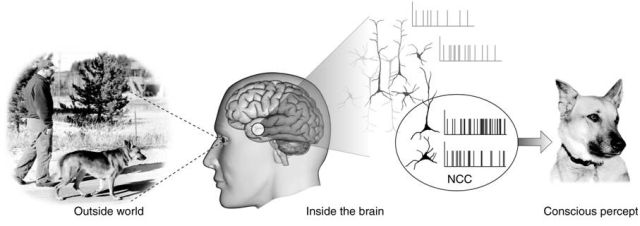
Neural Correlates Of Consciousness

Neural correlates of consciousness. Image credit: Christof Koch / Wikimedia Commons

Continue reading

Posted in Medical sciences, Natural and exact sciences, Research | Tagged , , , , , , , , | Comments Off on Solving the Problem of Consciousness

7 Steps to Happiness with Interactive Museum Hopping

While our lives are becoming increasingly digital, with a growing number of hours spent on social media, online shopping and mobile parking, museums struggle to attract visitors and convince them to attend their brick-and-mortar premises – not just Facebook pages or YouTube channels.

Many museums develop interactive audio guides or smartphone apps to keep visitors interested. Mariann Raisma, Head of the Board of University of Tartu Museums, admitted that she and her colleagues are not impressed by this popular approach: “Why virtualise unique historic environments if we can offer real and authentic, even life-changing experiences in our museums?”

After a consuming brainstorming session, the staff of UT museums came up with an interactive museum hopping package that aims to bring visitors closer to a deeper understanding of self, everyday life, and happiness – all of that in real life, meaning offline.

1. Visit the stuffed animals’ shelter.

The university’s Natural History Museum is undergoing an extensive renovation, and its collection of stuffed animals is abandoned, totally unattended. Make a surprise visit to see the trapped creatures.

Packing in the stuffed animals at the UT Natural History Museum. Photo by Ove Maidla.

Packing in the stuffed animals at the UT Natural History Museum. Photo: Ove Maidla.

Continue reading

Posted in Estonia, Events, General, Tartu | Tagged , , , , , , , | Comments Off on 7 Steps to Happiness with Interactive Museum Hopping

How To Become a Master in the Startup Decathlon

Yrjo Ojasaar is an internationally successful entrepreneur, consultant, negotiator, and an occasional angel investor. He is also a valued teacher in our master’s programme entitled Design and Development of Virtual Environments. Yrjo gave a quick online interview with his initial reflections on the MIT Global Startup Workshop that is taking place in Tallinn this week, the upcoming disruption in global education, constituents of good entrepreneurial education, and start-ups.

[blackbirdpie id=”316150568391421952″]
[blackbirdpie id=”316151034290520064″]
Continue reading

Posted in Career, Estonia, Studies | Tagged , , , , , | Comments Off on How To Become a Master in the Startup Decathlon

A Singaporean View: The Tartu Market, a Landmark To Be Visited

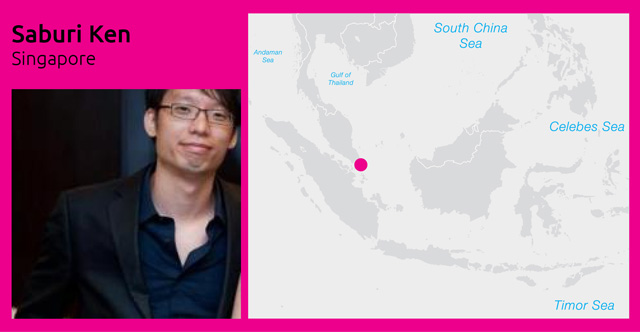
Saburi Ken is a first-year student of Business Administration at the University of Tartu. He comes from Singapore and represents our university as an international student ambassador in his home country.

Saburi Ken
During one of our Student Ambassadors meetings, we were all faced with this one question: Where would we take our friends if they flew over to Tartu?

Rapid responses from the others included visits to the various museums, the botanical garden, several cafes, pubs and clubs, but I was in deep thought as to what would be really different from the conventional suggestions and places that my friends would sincerely enjoy.

I thought, “If my best friends were to fly here from 13,000 km away and have limited time in Tartu, I ought to blow their minds. Definitely, certain museums would be interesting for them, especially the KGB museum, but it would not achieve the benchmark I have set. Hmmm…”

As all young men, I pretty much think and work the same way: food and action.

“I’m going to take my best friends to the Tartu Market, epic paintball activities and maybe pay a visit to some Estonian graveyards” (In hindsight, graveyards would not exactly be the place to go. I wanted to say strip clubs though).

Silence fell over the room. Priceless. Continue reading

Posted in Estonia, Student life, Tartu | Tagged , , , , , , , , , , | Comments Off on A Singaporean View: The Tartu Market, a Landmark To Be Visited

How Greenfinches Help Our Understanding of the Immune System

Tuul Sepp

Tuul Sepp. Image credit: Jaak Nilson.

Tuul Sepp is a researcher at the UT Institute of Ecology and Earth Sciences. Her PhD thesis on greenfinches and their immune system won the grand prize at the national competition of students’ academic works in 2012. Last year Tuul also received first prize in the Estonian Science Communication Award.

The majority of all living organisms are parasites – they grow, feed, and are sheltered on or in a different organism (host) while contributing nothing to the survival of their host. Does this sound like an exaggeration? Surely there must be more organisms trying to make their way in this world by ‘honest’ methods? Unfortunately not. Simple logic proves it: All organisms in this world are infected with several parasite species and most parasites are species-specific (feeding only on one host species).

So there are hosts, parasites, parasites of parasites, and so on. Parasites rule this world.

Of course, hosts do not go down without a fight. We have several layers of protection, starting with mechanical barriers (skin, mucus layers) and ending with a complex and highly integrated system of organs, cells, and molecules – the immune system. It has to be big and sophisticated – the variety of parasites is huge and there must be defence mechanisms against all possible intruders. Having this kind of protection is not cheap. It is expensive to maintain, it is expensive to train, and it is expensive to use. Is there a choice not to use it? Continue reading

Posted in Estonia, Natural and exact sciences, Research | Tagged , , , , , , , , , | Comments Off on How Greenfinches Help Our Understanding of the Immune System

Can The Financial Crisis Snowball Be Avoided?

Andres Kuusk

Playing chess is a lot like economic modelling. Photo from a personal archive.

Andres Kuusk works with economic modelling at the UT Institute of Economics. Last year he defended his PhD thesis on financial contagion during times of crisis.

In the recent financial crises episodes an interesting feature has been present. Crises that were initially local have spread quickly all over the world, becoming continuously bigger in the process and bringing down more and more countries – just like a rolling snowball successively grows by picking up new snow.

It is obvious that the country of origin of the crisis has to be at fault at least to some extent to be hit by the crisis – but what about the destination countries? Are these countries also at fault for the crisis spilling over and if so, then what can a country do to avoid being hit by the crises originating elsewhere?

Linkages between countries

Let’s start with the most intuitive reasons why crises propagate from one country to others. First of all, in the globally integrated world, there are strong linkages between countries – most importantly trade, financial and political ones. Let’s take trade effects, for example. If a country is hit by crisis, its main trading partners quite likely face problems as well. The direct negative effect is that there will be fewer consumers for the export of these partner countries as well as less foreign supply for their consumers. Continue reading

Posted in Research, Social sciences | Tagged , , , , , , , , | Comments Off on Can The Financial Crisis Snowball Be Avoided?

The Curious Case of Estonia’s Fashion Sense

Natalia Hoffman is an independent researcher into the visual communication of Estonia with the Estophilus Programme, a recent exchange student in Tartu from Aarhus University, Denmark, where she’s finishing her MA in Cognitive Semiotics, and a beetroot juice drinker big on detective stories who dresses in secondhand shops and watches TV for the sake of advertising. This is her third instalment in the series:

Case Studies on the Estonian Universe of Visual Meaning

Every time I go travelling I check with the online travel forums if there are any flea markets or car boot sales taking place wherever I’m going whenever I’ll be there. I do that because I think both the flea markets and car boot sales are a fair, retrospective indication of the aesthetic sense of the nation I visit, since you get people who have just cleared their attic or basement selling stuff there. Others sell dead people’s junk from house clearances. I love fully fledged junk shops and charity shops too. The junk shops seem to be an inexhaustible mine of peculiarities; last year I found a two-headed stuffed chick in one of them in London.

two heads on one chick   they buy junk

Charity shops, on the other hand, abound in clothes which local people feel bad about throwing away as they’re still perfectly usable, but for whatever reason won’t wear them anymore. Luckily, the guilt inherent to the feeling of responsibility for the environment can be easily dismissed as one dumps a bag full of used clothes in a charity shop’s metal container. Ergo, as Slavoj Žižek, contemporary Slovenian philosopher and cultural critic observes, by donating clothes to a charity, one gives back to the world, makes a contribution, shows the capacity for care and global awareness, and by participating in a noble, large collective project, fulfills the ethical duty to do something meaningful. In return one is granted redemption from being only a consumerist… Charity shops make life so much easier. One has to love them for their concealed contradiction, and their function as a moral purgatory. Plus, you always get a bargain there. Continue reading

Posted in Estonia, General, Humanities, Research | Tagged , , , , , , , , | Comments Off on The Curious Case of Estonia’s Fashion Sense