How The Weather Affects Our Emotions?

Many believe that the sun makes us happy and rain brings sorrow. In reality, the relationship between weather and emotions is much cloudier.

Scientists have investigated this topic from various perspectives. For example, it has been found that the weather plays a role in how people evaluate their satisfaction with life. Studies have been also carried out to explore its relationships with stock market investing behaviours and the amount of tips given in restaurants.

The effects of weather have some physiological effects as well – damp weather lowers our systolic blood pressure and cold weather slightly raises blood pressure. However, emotions and blood pressure are not directly related to each other. It is worth noting that sunshine does facilitate production of the hormone serotonin, which regulates memory, sleeping, appetite and mood. Continue reading

Posted in Research, Social sciences | Tagged , , , , , | Comments Off on How The Weather Affects Our Emotions?

How to Protect The Rare Alvar Forests?

Elle Rajandu’s doctoral thesis studies plant and lichen species diversity in the valuable alvar forests in Estonia.

These forests grow on shallow soils (thickness up to 30 cm) with a limestone base and belong to one of the rarest forest types in Europe – they are present only in the limestone-rich areas of western Estonia and the northwest Estonian islands. Because they are concentrated in these single areas of Europe, we are responsible for preserving alvar forests as rare ecosystems.

In addition to their uniqueness, alvar forests are also very rich in species. According to a 1997 survey, approximately 13% of the endangered and preserved species of flora and fauna in Estonian forests (up to 50% of mammals and 25% of vascular plants) are associated with alvar forests.

Alvar forests in Rapla county

Alvar forests in Rapla county are part of a nature reserve. Photo: Elle Rajandu

These figures become even more pronounced when one realises that alvar forests comprise only 3.3% of all Estonian forests. The area they cover used to be significantly larger but agriculture and forestry have replaced them with wide clearings and plains that are unable to be reforested. Continue reading

Posted in Estonia, Natural and exact sciences, Research | Tagged , , , , , , , | 2 Comments

Bringing The World to Tartu’s Orphanages

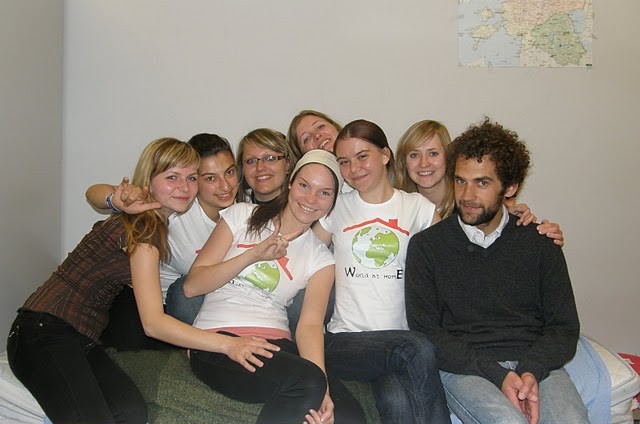
I arrived at the University of Tartu in August of last year and was welcomed by a lovely autumn to a beautiful city, which all too quickly was overtaken by a dark and much colder winter. I was invited to Tartu by the University to participate as a first-year student in the international Master’s program in semiotics. Near the low point of this dark and cold winter, when the days were the shortest, I encountered an unexpected source of light through my involvement with the AIESEC project World at Home.

AIESEC project team

The World at Home team.

The basic premise of World at Home, which began in January and continued until just a couple weeks ago, was to bring international volunteers to Tartu to work in the city’s orphanages — that is, to bring the world to these homes — in order to increase the children’s global awareness, as well as to foster a greater sense of initiative and to create a personal sense of connection with the larger world. Continue reading

Posted in Student life, Tartu | Tagged , , , , , | 1 Comment

Two Students Locked Up on Museum Night

Last Saturday night I climbed up to the attic of the university’s Main Building to explore one of the two surviving lock-ups where 19th-century students were held in solitary confinement for various misdeeds.

It happened to be European Museum Night, and the room was magically populated by two students from the past.

two 19th-century students: Karl and Jüri

Karl (on the left) wears a student uniform; Jüri can only afford his brother's vest. Photo: Inga Külmoja

Jüri, the son of an Estonian peasant from a place near Viljandi, was wearing an obviously over-sized vest which he had inherited from his elder brother. The brother, in turn, had inherited the family farmstead, whereas Jüri was sent to the university to become a priest.

Poor Jüri was locked up for wearing his beard too long – luckily, just for a day. In the 19th century, growing a beard was associated with revolutionary activity and was therefore forbidden at the University of Tartu (then: Kaiserliche Universität zu Dorpat). Continue reading

Posted in Estonia, Events, Student life, Tartu | Tagged , , , , , , , | 1 Comment

Reading Human Gene Codes and Minds

In an interview with Sigrid Kõiv, UT Professor of Cognitive and Forensic Psychology Talis Bachmann explains the possibilities of and problems with reading minds. The professor’s research interests include consciousness studies, visual awareness, advertising effects and much more.

Talis Bachmann

University of Tartu Professor Talis Bachmann. Image credit: Liis Treimann / Scanpix

Is the solution to the great problem of consciousness already in sight?

Well, sometimes I am an optimist, and sometimes I am not. I cannot see any great discovery around the corner that would be comparable to the unravelling of the genome structure. Data are becoming increasingly precise but the influx of new information brings with it new research problems that more often than not are as complicated as the previous ones.

The nature of consciousness is largely still a mystery. The same brain can be asleep or awake. In one case – dreamless sleep – we are not conscious of anything, but in other cases, even if we close our eyes, we can still imagine the space around us and we can hear.

So, the conscious state is difficult to understand. The qualitative changes that occur in the brain when it transfers from an unconscious state to a state of consciousness remain a mystery that many scientists are trying to solve. Continue reading

Posted in Medical sciences, Research, Social sciences | Tagged , , , , , , , | Comments Off on Reading Human Gene Codes and Minds

How To Fix Our Image of Man?

Bruno Mölder is a senior research fellow of theoretical philosophy at the UT Institute of Philosophy and Semiotics. Below is a shortened version of a lecture that Bruno gave at the festive meeting dedicated to the 93th anniversary of the Estonia’s independence and was originally published in the Eesti Päevaleht newspaper.

Common understanding of man and the world needs serious involvement from philosophy. This is especially needed in present-day Estonia, where horoscopes and quackery have taken root in the mainstream media, and magicians, witches, psychics, aura purifiers and energy healers have become leaders of public opinion.

The Tuhala Witch's Well

The Tuhala Witch's Well is famous in Estonia for "boiling over" after heavy rains or when the snow finally melts. A legend says that the whisking Tuhala witches make it boil. Photo: Jarek Jõepera

Even if one views all of these things as light entertainment, they still strengthen the opinion that although everything said by diviners and augurs is not completely true, they might have a point. But this kind of thinking is possible only when things are not fully thought through.

We can see this if we ask ourselves what the world would be like if witchcraft or astrology were possible. In addition to natural laws, this world would be governed by laws that are unknown to science. People would not be fully autonomous and instead would be led by mysterious forces. Continue reading

Posted in Estonia, Humanities, Research | Tagged , , , , , , , , | Comments Off on How To Fix Our Image of Man?

The Baltic States: Moving Together or Apart?

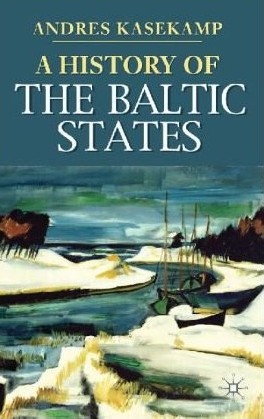
A History of The Baltic StatesOur professor of political science, Andres Kasekamp, published “A History of The Baltic States” with Palgrave Macmillan last year, and is on tour to promote his latest book. During his visit to our partner university in Vilnius, Prof. Kasekamp presented his views on cooperation between the Baltic states (see the videos below).

The term “Baltic states” originates from as late as the 20th century. “Today we can see that we’re sometimes together in one boat, and sometimes not,” stated Kasekamp. He then continued a brief walk-through of the history of Lithuania, Latvia and Estonia from the 13th century up until WWII.

Historically, Lithuania stood apart from Latvia and Estonia. While the Lithuanians were politically united in the 13th century under King Mindaugas and managed to resist Germanic crusaders, the Estonians and Latvians were conquered and ended up with a non-native ruling elite. A few centuries later the Reformation was successful in Estonia and Latvia, whereas counter-reformation boomed in Lithuania.

In the 1920–30s the perception of an external enemy in the region diverged: Latvia and Estonia’s common enemy, Soviet Russia, appeared to be Lithuania’s only friend.

Baltic cooperation reached its peak during the common struggle for independence in 1987–1991. Kasekamp illustrated this period using a vivid metaphor of the team cycling race (borrowed from Rein Taagepera), in which Latvia kicked off the race, Estonia took over the lead, and Lithuania “made the final brave push towards independence.” Continue reading

Posted in Estonia, Events, Research, Social sciences | Tagged , , , , , , | 1 Comment