Tartu 1992-1993: The Wild, Wild West

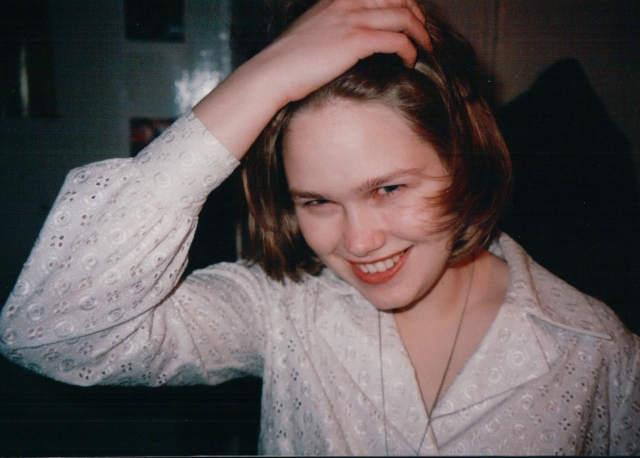
I am a foreign Estonian born and raised in New York City who came to study for a year at ‘Tartu Ülikool’ in 1992, just one year after Estonia had regained its independence. I had just finished my undergraduate degree in the US and was in the first class of foreigners studying Estonian at the University of Tartu. Everything was new and we all were learning as we went along. The old rules of the Soviet system didn’t apply anymore and the new ones were in the process of being invented. We were in the wild, wild west and as we crossed this unchartered territory we tried to enjoy every minute of it. What follows are some remembrances from that year.

Estonian language class in 1992

Estonian conversation class with Tiina Kikerpill (first from the left). I love this photo since we are in our classroom and it shows the wonderful carpeted walls and groovy green chairs. I’m second from the left.

Narva maantee 25

The foreigners were all given dorm rooms at Narva maantee 25 on the 3rd floor. You could find us behind the ‘turvauks’ (security door) and ours was the the only floor that had one. I don’t know if they were trying to protect us from the locals or just keep us isolated.

The floor housed the western foreigners as well as one or two people from other former Soviet republics, but as they lived at one end of the corridor and seemed to be long term tenants, we didn’t interact with them. Our group was made up of Americans, Brits, Swedes, and Finns. Four of us were foreign Estonians and the rest had come to Tartu for a whole host of reasons. Continue reading

Posted in Estonia, Student life, Tartu | Tagged , , , , , | 3 Comments

Nature or City? The Brain Makes the Difference

When you see a picturesque forest lake from your window, the brain is working differently than when the view includes a maze of tall buildings.

After researching the electrical activity of the cortex with brain imaging technology, psychologists from the University of Tartu discovered that while one is solving a simple problem, the brain gives different signals, depending on whether there is a natural view or artificial landscape as the background on the computer screen.

South Estonian view

The impact of seeing this South Estonian view is similar to that of drinking coffee — the electrical activity patterns in the brain are more characteristic of being awake. Image credit: Toomas Tuul.

“The background didn’t have anything to do with the task”, said Talis Bachmann, a professor of cognitive and legal psychology, who led the study. The study is a part of Renate Rutiku’s doctoral thesis. Continue reading

Posted in Research, Social sciences | Tagged , , , , , , , , | Comments Off on Nature or City? The Brain Makes the Difference

Religious People More Prone to Depression?

What’s the connection between a person’s worldview and the risk of becoming depressed?

Graffiti of meditating creatures

Graffiti of meditating creatures in Tartu. A recent international study shows that religious people or those engaging in spiritual practices are also more depressed than others. Image credit: Inga Külmoja.

Research by psychologists has indicated that religious persons see themselves as happier. Then again, most of the research has been conducted in the US, where approximately 80 percent of the population claims to be connected to some church or sect. Surveys made in other countries provide conflicting results.

For example, studies have shown that people turn to religion when facing serious hardships and that religious people are happier than non-religious, primarily when in harsh conditions and religious societies.

An English study found that persons who see themselves as spiritual but do not follow any specific religion are more restless and depressed. This could have many possible reasons. Those with a diagnosis of depression may be more interested in self-help and spiritual movements than the average person. Soul searchers of fragile mental health can do poorly when there’s no support from a church or congregation. Continue reading

Posted in Estonia, Research, Social sciences | Tagged , , , , , | Comments Off on Religious People More Prone to Depression?

Infographic: 20 Years of English-Taught Studies at UT

UT has been international throughout its nearly 400-year history: you need only look at its historic names to understand this: Academia Gustaviana — Kaiserliche Universität zu Dorpat — Imperatorski Derptski Universitet — Tartu Ülikool.

Teaching has historically taken place in Latin, German, Russian… and Estonian. In this perspective, English is a very recent language of instruction in Tartu. However, the future of UT’s internationalisation will most likely be written in English.

This autumn we look back at the first twenty years of English-taught studies at the University of Tartu and discuss the future of international education at UT during a dedicated seminar on the topic. This infographic provides the main stats and milestones in the development of international Bachelor’s and Master’s-level programmes along the way. Continue reading

Posted in Events, Studies, Tartu | Tagged , , , , , , | Comments Off on Infographic: 20 Years of English-Taught Studies at UT

Some Things About Something: A Buddhist Memoir From Tartu

Chipamong Chowdhury is a visiting lecturer at the University of Tartu’s Centre for Oriental Studies. His main research interests include Theravāda studies, Pāli Buddhism, and anthropology of Buddhism.

Last year someone in the Toronto subway asked me: “Can you give me enlightenment”? “My friend”, I said, “I am also looking for the same thing”.

Chipamong Chowdhury

Baking ginger cookies during the Christmas season in Tallinn.

During my stays in Tartu, many people expressed their great interest in Buddhism − some of them in intellectual aspects of Buddhism, others in psychological or therapeutic teachings, and still others in deep meditation. Strangely, some do not know in what or why they are interested − perhaps they are interested for the sake of interest! Nevertheless, despite being an alien and Oriental spiritual bio-product, Buddhism found its safe home in Estonia. His Holiness Dalai Lama visited Estonia thrice, suggesting that there is something special about ‘Estonian Buddhism’ and something beautiful about Estonia as a home for Buddhist spirituality.

When I walked in the streets of Tartu, people came to me with some stereotypical questions. Some common questions were: Are you Buddha? (which I am not, nor do I want to be); do you drink? (to which I said yes, but when they find out I drink only coffee or Coca-Cola, they look shocked); and what is Buddhism? This last one is the question I always avoid answering because it is no longer appealing to me.

Continue reading

Posted in Estonia, General, Tartu | Tagged , , , , , , , , , | Comments Off on Some Things About Something: A Buddhist Memoir From Tartu

Pigheadedness Brought Me to Post-Soviet Estonia

What brought me to Estonia was pigheadedness, plain and simple. It was the same pigheadedness that moved me to choose a college in Minnesota 1,400 miles from my home in Massachusetts, where, as my parents were fond of mentioning, there were plenty of perfectly fine colleges.

That adventure over, I looked around for another one (even though, of course, there were plenty of perfectly fine adventures nearer by). I had studied Russian in college. Russia, therefore, was too obvious a destination. (I was that sort of kid.) I wish I could say my choice was more thoughtful, that I had some deeper affinity or knowledge before I arrived in Estonia. But the truth is my connection was extraordinarily shallow: People in Moscow used to chide me for my ‘pribaltiyskiy aktsent’. And I like cold weather. So, Estonia.

Tricia Cornell

Me in Tartu.

This was 1995. I marvel now that I arrived less than four years after the Soviet Union disintegrated. But I was young and four years seemed to be most of a lifetime. And, already, old Baltic hands were talking about how all the interesting changes had happened years ago. Continue reading

Posted in Estonia, Student life, Tartu | Tagged , , , , , , | Comments Off on Pigheadedness Brought Me to Post-Soviet Estonia

To Drink, or Not To Drink?

Aimar Ventsel is a Senior Researcher at the UT Department of Ethnology. His research interests include economic and legal anthropology, music cultures, and identity politics.

During the last day of May and the first day of June, a conference entitled “Drinking and Driving Is So Much Fun” took place at the UT Department of Ethnology. The title of the conference was borrowed from a relatively famous tune by the 80s British punk band The Business. In the song, the British punks sing about how cool it is to booze and do all kind of stupid things, including driving under the influence.

This choice of name wasn’t random. The conference centred around the role of alcohol in the Arctics, especially Siberia, a region notably problematic in this area. We decided to look at the other side of the coin: Why do people drink when the results can often be catastrophic? To put it briefly, the focus was on the cultural and social significance of drinking alcohol.

Students socialising

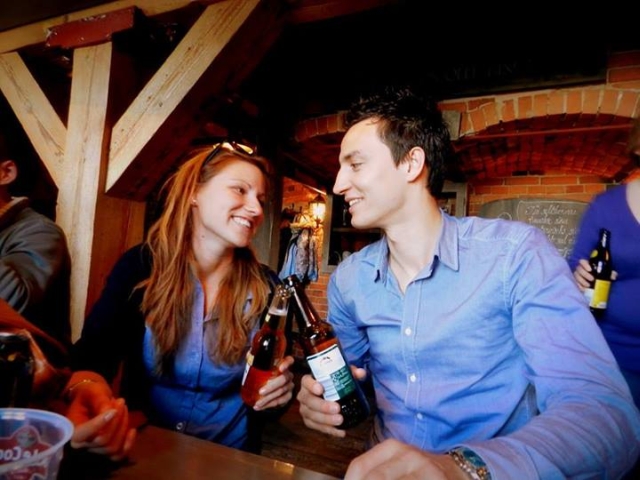
Drinking is also a part of popular student culture. In the photo: Tartu students at a pub. Image credit: ESN Tartu.

Continue reading

Posted in Events, Humanities, Research, Social sciences, Tartu | Tagged , , , , , , , , | Comments Off on To Drink, or Not To Drink?