Why “Searching for My Roots” Also Means “Working on My Fluency”

I grew up in California as an Estonian-American. Despite the fact that only my father was Estonian, my parents were unusually avid: my mother learned Estonian from him and they raised us together in an Estonian-speaking household, with a strong sense of identification with Estonia.

Before I was three years old, I knew how to respond when someone asked: “Veervay? What kind of name is that?” “Estonian,” I’d say. And when the nearly inevitable question – what kind of a language is that? – came up, I knew well that my mother often answered “It’s close to Finnish.”

Estonian girls in California

Estonian girls in California (Virve is on the left). Photo from personal archive.

Continue reading

Posted in Estonia, General, Humanities, Research | Tagged , , , , | Comments Off on Why “Searching for My Roots” Also Means “Working on My Fluency”

What Our Facebook Community Likes

Ever since the moment we hit a certain fan number count, Facebook has kindly provided us with some generalised info on who the University of Tartu’s fans, or ‘likers’, are. We once shared this nice graph with demographic info on our Facebook wall, and it received generous feedback from the community.

Here is an up-to-date blueprint of UT’s Facebook community:

The University of Tartu's Facebook page user demographics

According to Facebook, the info on countries and cities is based on the geolocation of users’ IP addresses, whereas the language data comes from the users’ default language setting selected when accessing Facebook. Continue reading

Posted in Estonia, General, Tartu | Tagged , , , | 3 Comments

GO SOUTH, Go Fun!

Gabriela Küsters is an Erasmus student from the University of Applied Sciences in Holland. Gabriela also works as a website reporter at her home university and studies journalism and newswriting at the London School of Journalism.

Study abroad is perhaps one of the most thrilling phases of a student’s academic career.  It is the time where scholars say farewell to their home countries and embark on a long journey of innovative discoveries and excitement. Although most students are unaware of what to expect in this new phase of their lives, they are definitely certain of one thing: Their Erasmus experience will be one they will certainly never, ever forget.

Although Erasmus is supposed to be just another average school year, students do take advantage of it to party excessively, study less and travel more. Tartu is obviously not any different. Although the University of Tartu offers a vast range of excellent courses taught by tremendously competent lecturers, the Erasmus Committee has the same ideal as any other Committee in Europe: To make students experience different cultures and have the time of their lives.

It was by following this legacy that the Committee organized the GO SOUTH trip.  On the 10th of September, The ESN group packed up all of the international students in two buses and took them to visit the magical places in the southern part of Estonia. For the small sum of 17€, students enjoyed a whole day of entertaining activities and pleasurable sightseeing with their peers.


Continue reading

Posted in Estonia, Events, Student life, Tartu | Tagged , , , , | Comments Off on GO SOUTH, Go Fun!

Strong Magnetic Field Hampers Lying

University of Tartu cognitive and law psychology professor Talis Bachmann and doctoral candidate and lector at the Estonian Academy of Security Sciences Inga Karton carried out experiments to determine whether it is possible to affect the likelihood of lying by stimulating the human brain.

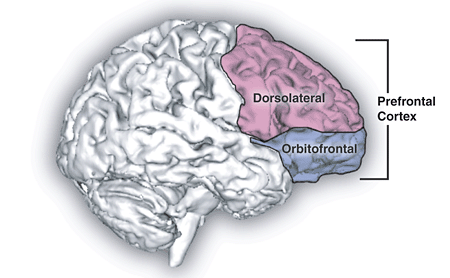
Prefrontal Cortex

Prefrontal Cortex: The dorsolateral prefrontal cortex in the brain (shown in purple) is thought to be intimately involved with the process of decision-making. Photo: Wikimedia Commons

The dorsolateral prefrontal cortex (a part of the brain neocortex) regulates short-term memory, plays an important role in directing intellectual processes, and also takes part in morality-related decisions. This region has also been shown to play a significant role in several deceptive activities, including cheating and lying. Continue reading

Posted in Research, Social sciences | Tagged , , , , , | Comments Off on Strong Magnetic Field Hampers Lying

The Historical Jesus: The Problem of Science in the Context of Religion

Ain Riistan is a researcher of religious studies at UT and an associate professor  in theology of free churches and history of religions at Tartu Theological Seminary.

Icon of Jesus Christ at the Aya Sofya cathedral in Istanbul, Turkey

Detail of Deësis mosaic at the Hagia Sophia church in Istanbul, Turkey

Can a scientific study of a religious text be made without a religious component to it?

I say no, it cannot be done. I will demonstrate this point by focusing on one specific field of such studies: research on the historical Jesus.

The paradigm of the historical critical method in Biblical Studies is in a state of crisis. This is the overall conclusion of my doctoral thesis entitled “The Historical Jesus: the Problem of Science in the Context of Religion”. The thesis is composed of nine articles published in a period that extends over a decade.

What started as an optimistic scientific and religious interest in the figure of the historical Jesus more than ten years ago soon changed into a sort of disillusionment.

Continue reading

Posted in Humanities, Research | Tagged , , , , , , | Comments Off on The Historical Jesus: The Problem of Science in the Context of Religion

A Year in Tartu

Francesco Orsi is a postdoctoral researcher at the UT Department of Philosophy. Today, on his birthday, Francesco shares his thoughts on the first year spent in Tartu.

A year and about twenty days ago I set foot in Tartu. I made my journey by train from Tallinn. All I could see was forests, trees, more forests, apparently abandoned villages where the train stopped (for whom?).

I had never been on such a slow and bouncy train…with a wireless connection. The arrival in Tartu was equally an estranging experience: a station in the middle of nowhere, only one or two taxis outside, and a city of wooden houses I’d never seen before (except in the mountains of Northern Italy I guess).

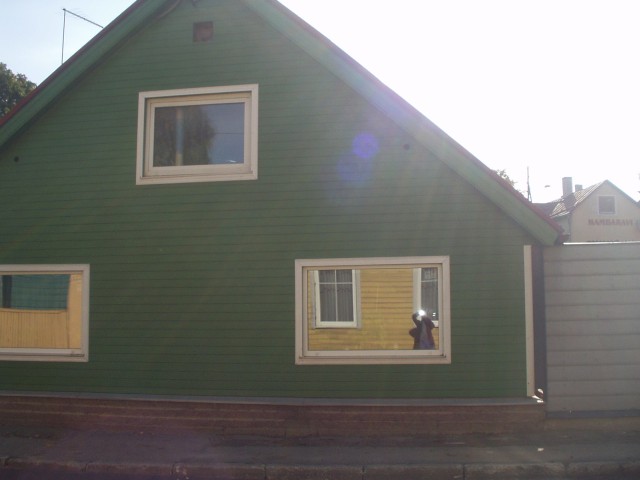
Francesco Orsi discovering Supilinn in Tartu, Estonia

Discovering Supilinn

Continue reading

Posted in Estonia, General, Tartu | Tagged , , , , , | Comments Off on A Year in Tartu

Podcast: Semiotics – Lingering or Thriving?

Palmse Manor Ensemble
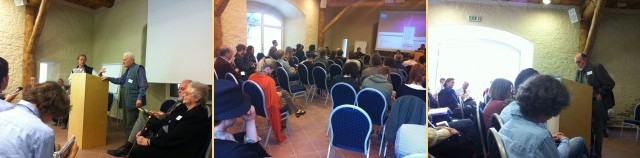
During the last week of August, three generations of scholars gathered at the beautiful Palmse Manor ensemble in northern Estonia to converse about the core issues of semiotics, the study of signs and sign systems.

The five-day event, Tartu Summer School of Semiotics, was planned as a revival of the legendary Summer Schools of Semiotics in Kääriku, a tradition initiated by Juri Lotman in 1964.

One of the important discussions in Palmse focused on the current state and future of semiotics as a discipline. All of the scholars seemed to agree that semiotics has become very diverse and lacks unified terminology: Basic semiotic terms are defined in a number of different ways by various authors.

While some researchers viewed this extreme variety as possibly leading to the death of the field, others interpreted it as a sign of the richness and value of semiotics.

Listen to what Boris Uspenski, a member of the  Tartu-Moscow Semiotic School, Eero Tarasti, President of the International Association for Semiotic Studies, Winfried Nöth, Professor of Linguistics and Semiotics at the University of Kassel, and Marcel Danesi, Editor-in-Chief of Semiotica, a major academic journal covering semiotics, think about the past, present and future of semiotics.

Tartu Semiotics Summer School 2011
I wish I had talked to many more semioticians and found out their views on the “lingering-thriving” issue. A secret voting to establish the dominant view would have been insightful, too.  The second and last edition of this podcast will feature individual interviews with the above-mentioned semioticians, recorded in Palmse. I’d like to thank all interviewees, as well as Katre Pärn, Kaie Kotov and Paul Külmoja for their help in making this podcast happen.

Posted in Estonia, Humanities, Research, Tartu | Tagged , , , , , | 2 Comments